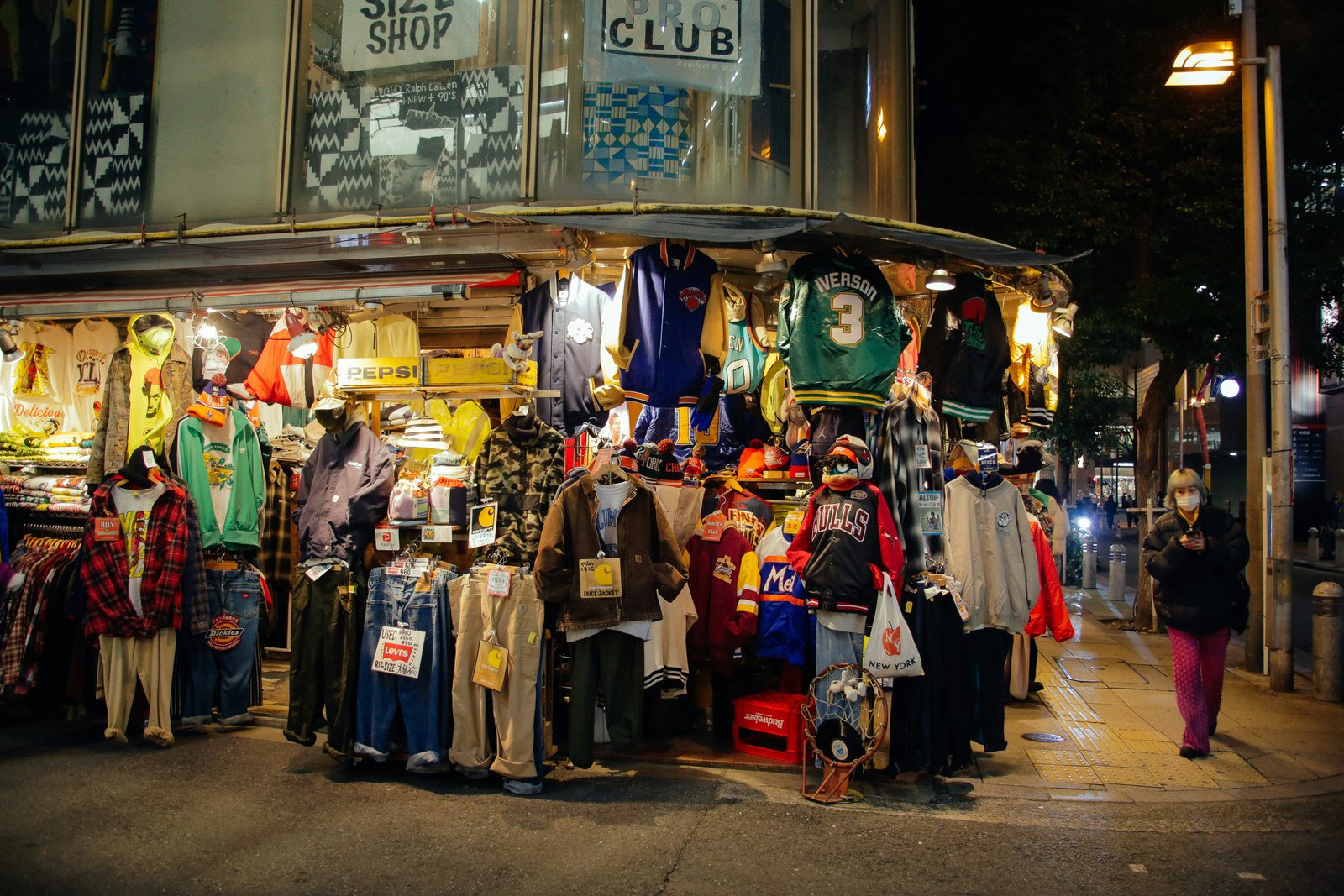

There is a scene playing out across Tokyo’s backstreets right now that would have been unthinkable a decade ago. In Shimokitazawa, where the streets are narrow and the vintage stores are stacked like shipping containers, the racks are being picked clean by foreign tourists. In Koenji, where punk and retro collide, international visitors are hauling away military jackets and band tees at prices that seem almost unfair. And in upscale Daikanyama, shoppers are calmly walking out with archival Comme des Garçons pieces that would cost double in New York or London.
Japan’s secondhand fashion industry is no longer a market for domestic consumers alone. It’s a global one.
The TikTok Effect and the Weak Yen
The drivers of this shift are not mysterious. Social media, a record-breaking tourism boom, the rise of online resale platforms, and an increasingly weak yen have all converged to turn Japan into a vintage shopping paradise for international visitors.
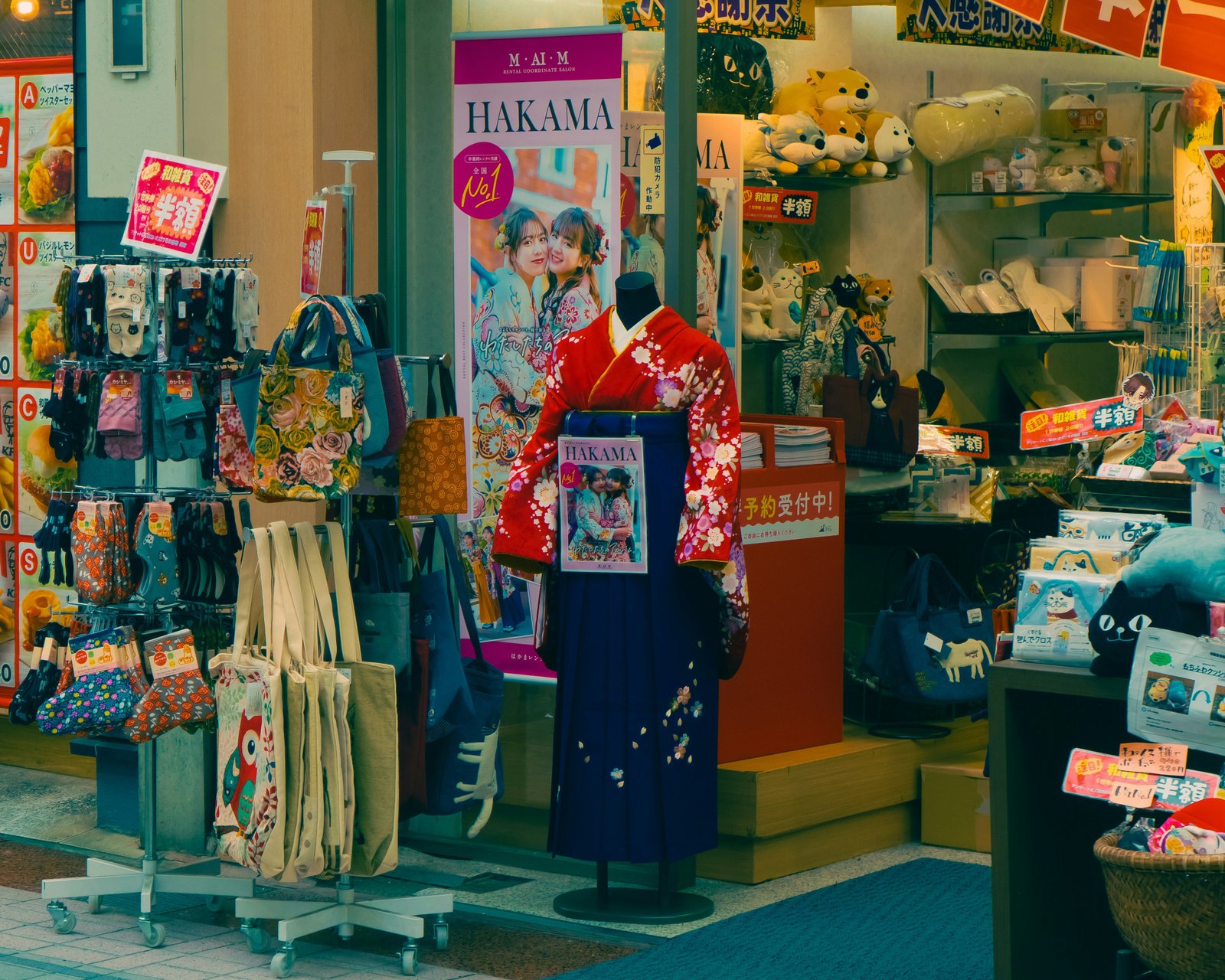
Chicago native Brooke Crum, lead fashion stylist at Tokyo-based personal styling service The Foreign Finds, has watched interest in Japan’s vintage scene surge since the country’s borders reopened after the pandemic. “TikTok especially has brought in this whole algorithm of ‘You’ve got to go here, you’ve got to shop there,'” she says. “People are obviously very enamored with what they can access based on where the yen is right now”.
The numbers back this up. Japan welcomed over 36 million visitors in 2025, with a substantial portion coming with a shopping agenda. The exchange rate means that a Comme des Garçons cardigan that might cost $200 in the US can be found for $50 in Tokyo. An Issey Miyake pencil skirt for $80. A vintage Chanel tweed suit for $2,200—double the price stateside.
Isabelle Truman, a Los Angeles-based freelance fashion editor, arrived in Tokyo in April with high expectations and still found herself surprised. “I’d heard the shopping was good, but I actually hadn’t understood simply how good it could be,” she says.
The Districts: Where the Treasure Lives
The vintage ecosystem in Tokyo is famously decentralized. Each neighborhood has its own personality, its own specialty, and its own price point.
Shimokitazawa remains the undisputed capital of Tokyo thrifting. The neighborhood is a warren of small shops selling everything from vintage T-shirts to military jackets to streetwear. The energy is casual and approachable—perfect for first-time visitors.
Koenji is the edgier cousin. This is where you go for punk, rock, and retro. The Pal Shotengai shopping street has declared itself a “Fashion Special Zone,” with over 100 vintage shops packed into its covered arcade. It’s grittier, more local, and less touristed than Shimokitazawa.
The best shops are often upstairs. “That’s the moat,” one vintage buyer explained. “A flipper running Mercari arbitrage from their apartment isn’t going to hike up to a 4-tsubo room above a tobacco shop to dig through a rail of ’90s Comme tags. The discovery tax is the whole point”.
Harajuku and Omotesando offer a different kind of experience. Takeshita Street is fun and youthful, but Cat Street and the Omotesando backstreets are where you’ll find serious vintage curation, designer resale, and luxury pieces that blur the line between secondhand and archive.
Daikanyama is the upscale enclave where consignment shops provide receipts, care histories, and material breakdowns for investment-worthy pieces. This is not bargain hunting; this is strategic acquisition.
The Local Sellers Feeling the Squeeze
For every tourist thrilled by a bargain, there is a local seller feeling the pressure. The globalization of Japan’s secondhand market has transformed the economics of vintage retail.
Seiya Amano, founder of ‘Bout, a vintage apparel store in Tokyo’s Taito Ward, puts it bluntly: “The impact has been enormous. When the cost of acquiring products rises this much, you have no choice but to increase prices”.
The competition is not just from tourists walking through the door. Online resale platforms like Mercari and Depop have made Japanese fashion more accessible than ever before, but they have also intensified competition. According to Jacques Noel Manuel, co-owner of Livebait NYC, “A lot of people are now treating secondhand fashion as a business. That creates an environment where more people are sourcing specifically to resell”.
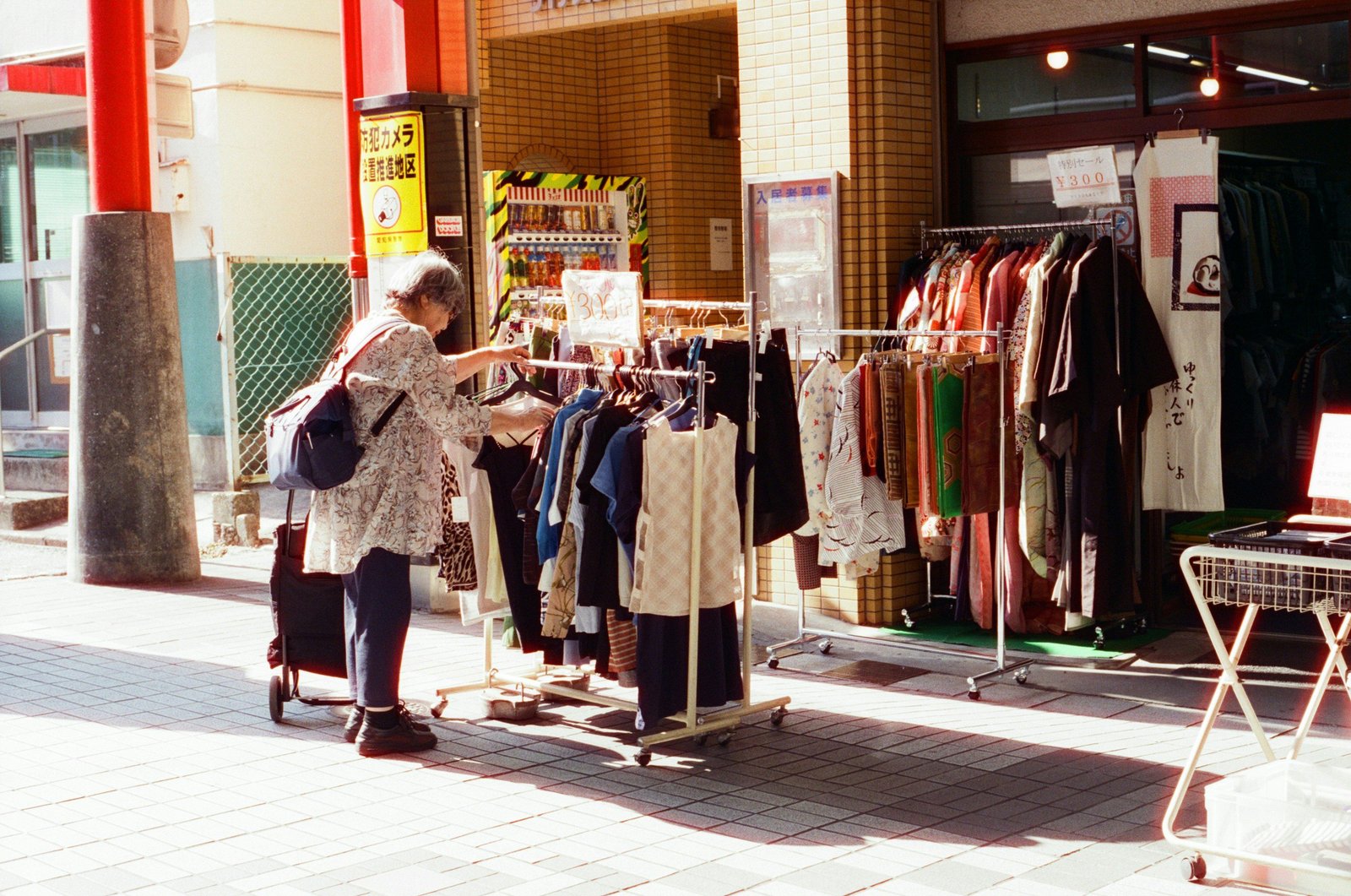
Even shipping costs have become a factor. Sonoe Sugawara, a kimono specialist in London who sources from Japan, says costs have “doubled or even tripled over the last five years”.
The Cultural Cost of Global Demand
The bigger question, according to both sellers and buyers, is whether the very culture that made Japan’s secondhand fashion scene so influential can survive its own success.
“There’s definitely a tension there,” Manuel says. “People get into these styles because they want to feel unique, and then something becomes more mainstream”.
In Tokyo, stores that once catered primarily to locals now regularly welcome international shoppers following social media recommendations. Naoki Kajiwara, owner of Leave Me Alone and LVMY LND, has noticed the shift clearly. His regional shop in Niigata still draws mostly domestic customers, but his Tokyo location now sees a steady flow of international visitors—many of whom discovered the store through TikTok, Google Maps, and multilingual guides.
“The distance between tourists and clothing stores has narrowed thanks to TikTok, YouTube videos and websites created in their native languages specifically for tourists looking for clothing stores,” Kajiwara says. “As a result, I’ve noticed an increase in trips where the primary purpose is to buy vintage clothing”.
Some dedicated bargain hunters are now venturing further afield to regional cities in search of more unique selections.
What Makes Japanese Vintage Different
So what is it about Japanese vintage that draws people from around the world? According to Kajiwara, it’s not just the prices. Japan’s vintage market is distinguished by its vast array of stores with highly individualized stock, elevated by the hyperspecific knowledge of those who curate it.
While historical value and rarity are often prioritized in Western vintage markets, in Japan, the focus is on subtle details, practicality in styling, and the story revealed through the garment.
That diversity has allowed Japan’s vintage market to cultivate a distinctive culture, one that is still alive and well—even as it becomes increasingly global.
The Bottom Line
The weak yen may have accelerated international attention, and social media may have broadened the audience. But what continues to draw shoppers from around the world is a secondhand fashion culture built on curation, preservation, and a depth of knowledge that is difficult to replicate elsewhere.
For tourists, Japan remains a vintage wonderland where the bargains are real, and the quality is high. For local sellers, the influx is a double-edged sword: more demand, but also more competition and rising costs. And for the culture itself, the question is whether the global attention will preserve what makes Japanese vintage special—or slowly erode it.
For now, the shops are still full, the racks are still stacked, and the treasure hunt continues.